


brain-health-after-50-what-watching-my-mom-taught-me
Brain Health After 50: What Watching My Mom’s Dementia Taught Me About My Own
Genetics are part of the story. The habits you build now write the rest of it.
Published: June 2026 | Vital Blink
I was at an event yesterday and ran into a friend I had not seen in a while. I knew her mom had moved in with her and her husband, and she had become the primary caregiver. Her mother has dementia. 
She works full time, has a wonderful husband who provides support, and her sisters pitch in when they can. But the load is still so much for these amazing souls who take this on. Not just the tasks, appointments, meals, medications, but the emotional weight too.
I told her about how I’ve been watching my mother’s dementia progress with unusual awareness. I told her: I don’t think of her as the woman who raised you anymore, and that’s ok. Because that woman isn’t there. The things you’re experiencing right now, the confusion, not recognizing some people and places, in the early stages it was frustration and probably fear, because she had watched her own mother go through this. This is a different stage of life she’s moving through.
I admire the people who take on the loving and selfless task of caregiving.
For people in our stage of life, watching this can bring up a lot of emotions. I’m choosing to be proactive, because now we know that genetics are only one part of the story, and it is important to start early with lifestyle habits, as Alzheimer’s and dementia have their roots in us long before symptoms appear.
What can I do better to prevent reaching the point where I’m not sure who that young man is, my grandson?
Why Brain Health After 50 Starts Earlier Than You Think
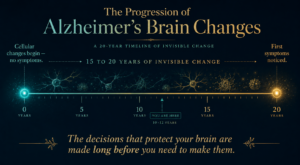
The science on this has become clearer over the last decade. Alzheimer’s disease does not begin when someone forgets a name or loses a set of keys. The cellular changes, the buildup of amyloid plaques and tau tangles in the brain, begin accumulating 15 to 20 years before any clinical signal appears (Jack et al., The Lancet Neurology, 2010). That means the decisions that matter most for brain health after 50 are the ones made well before there is any visible reason to make them.
A landmark 2020 analysis published in The Lancet identified twelve modifiable risk factors that together account for approximately 40 percent of dementia cases worldwide (Livingston et al., The Lancet, 2020). Forty percent. Physical inactivity, poor metabolic health, social isolation, and inadequate sleep were among them. Genetics contribute to risk, but they are not the ceiling. The habits layered over your genetic baseline shape a substantial portion of the outcome.
That number changed how I think about this. The question is not whether I carry the genes. The question is what I do with the decades I have between now and whenever.
What Is Cognitive Healthspan?
Cognitive healthspan refers to the number of years a person maintains full mental capacity, including memory, focus, processing speed, and emotional regulation, without significant decline. It is distinct from lifespan. The goal of brain health protocols is not simply to live longer, but to extend the years in which the brain operates at its full capacity.
What Brain Health After 50 Actually Requires at the Cellular Level
When I started paying serious attention to this, I kept running into information about what to avoid and very little about what to actively build. I wanted to understand the mechanism. The brain is the most metabolically demanding organ in the body, representing roughly 2 percent of body weight while consuming approximately 20 percent of total energy at rest (Clarke and Sokoloff, Basic Neurochemistry, 1999). It runs on adenosine triphosphate (ATP), and the system that produces and recycles ATP is the foundation underneath most of what we call cognitive function.
Several cellular mechanisms support this process. Understanding them helped me see why brain health after 50 is not one problem with one answer. It is a system, and each part of the system matters.
What Is ATP?
ATP, or adenosine triphosphate, is the primary energy currency of every cell in the human body. Every thought, every memory retrieval, every signal a neuron fires requires ATP. The brain burns through it faster than almost any other tissue and depends on a continuous, uninterrupted supply. When ATP production is compromised, cognitive capacity follows.
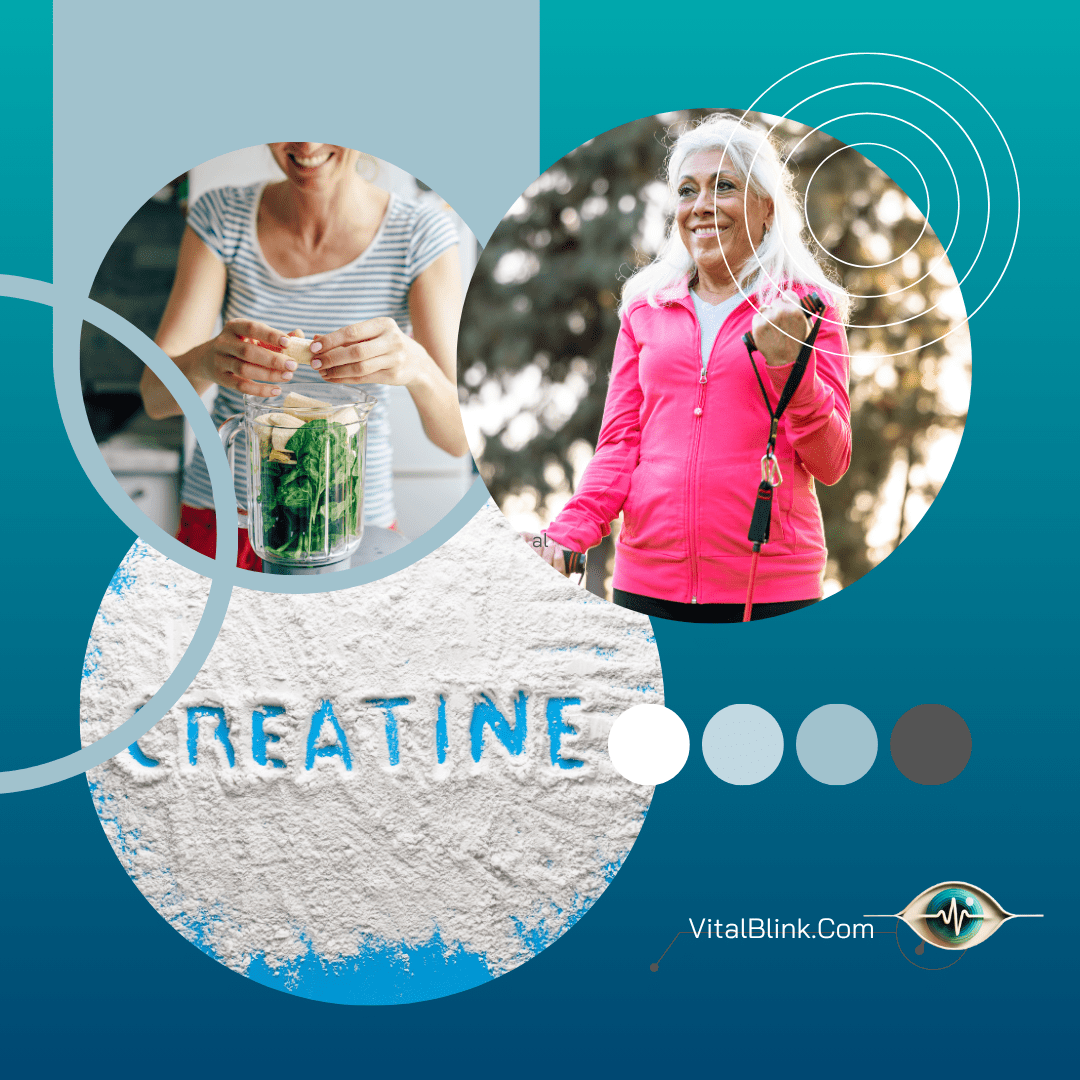
Brain fuel starts with creatine. Creatine is the raw material the brain uses to recycle ATP rapidly. Research published in Proceedings of the Royal Society B found that creatine supplementation improved working memory and processing speed in healthy adults, with effects most pronounced in populations with lower baseline intake (Rae et al., 2003). The brain does not store large reserves. It depends on a consistent supply to maintain output under demand.
Mitochondria are where sustained capacity is actually built. Coenzyme Q10 (CoQ10) and acetyl-L-carnitine (ALCAR) support mitochondrial function directly. CoQ10 is an essential component of the electron transport chain, the process through which cells generate the majority of their ATP, and levels decline measurably with age (Bhagavan and Chopra, Mitochondrion, 2006). ALCAR supports the transport of fatty acids into the mitochondria for fuel and has been studied for its role in preserving cognitive function in aging populations (Montgomery et al., American Journal of Clinical Nutrition, 2003). Together they address energy production at the cellular level rather than stimulating the nervous system from the outside.
Neurotransmitter balance determines the quality of the signal. L-theanine, L-tyrosine, and citicoline each support different aspects of how neurons communicate. L-theanine promotes calm, focused attention without sedation by modulating alpha brain wave activity (Nobre et al., Asia Pacific Journal of Clinical Nutrition, 2008). L-tyrosine is a precursor to dopamine and norepinephrine, both critical for sustained attention and working memory under cognitive load (Colzato et al., Frontiers in Behavioral Neuroscience, 2013). Citicoline supports the synthesis of phosphatidylcholine, a key structural component of neuron membranes, and has been shown to support memory and cognitive performance in multiple clinical trials (Alvarez et al., Methods and Findings in Experimental and Clinical Pharmacology, 1997).
What Is Citicoline?
Citicoline, also known as CDP-Choline, is a naturally occurring compound that the brain uses to build and repair neuron cell membranes. It also supports the production of acetylcholine, a neurotransmitter essential for memory and learning. Citicoline levels tend to decrease with age, making it a particularly relevant nutrient for women over 50 focused on long-term cognitive capacity.
Cellular hydration is not the same as drinking more water. Magnesium malate and electrolytes support the Krebs cycle, the metabolic pathway through which cells convert nutrients into usable energy.

Magnesium malate specifically uses the malate form of magnesium, which participates directly in energy production at the mitochondrial level. Magnesium deficiency is associated with impaired cognitive performance and is common in adults over 50 (Rude and Shils, Modern Nutrition in Health and Disease, 2006). Sodium and potassium regulate the electrochemical gradients that allow neurons to fire and reset efficiently.
The form of the vitamin determines whether it actually works. Pyridoxal-5-phosphate (P-5-P) is the active form of vitamin B6, and methylcobalamin (Methyl-B12) is the active form of vitamin B12. The synthetic precursor forms require conversion in the body, a process that becomes less efficient with age and is impaired in people with certain common genetic variants (Obeid et al., Clinical Chemistry and Laboratory Medicine, 2015). Elevated homocysteine, a byproduct of inadequate B vitamin metabolism, is an independent risk factor for brain atrophy and cognitive decline (Smith et al., PLOS ONE, 2010). Providing the active forms bypasses the conversion step entirely.
Where to Start: 5 Brain Health After 50 Habits With Real Evidence Behind Them
The research on brain health after 50 points consistently toward a few areas. None of them are dramatic. None of them require a complete overhaul of how you live. What they require is consistency, because the cellular benefits of these habits are cumulative and build over months and years, not days.
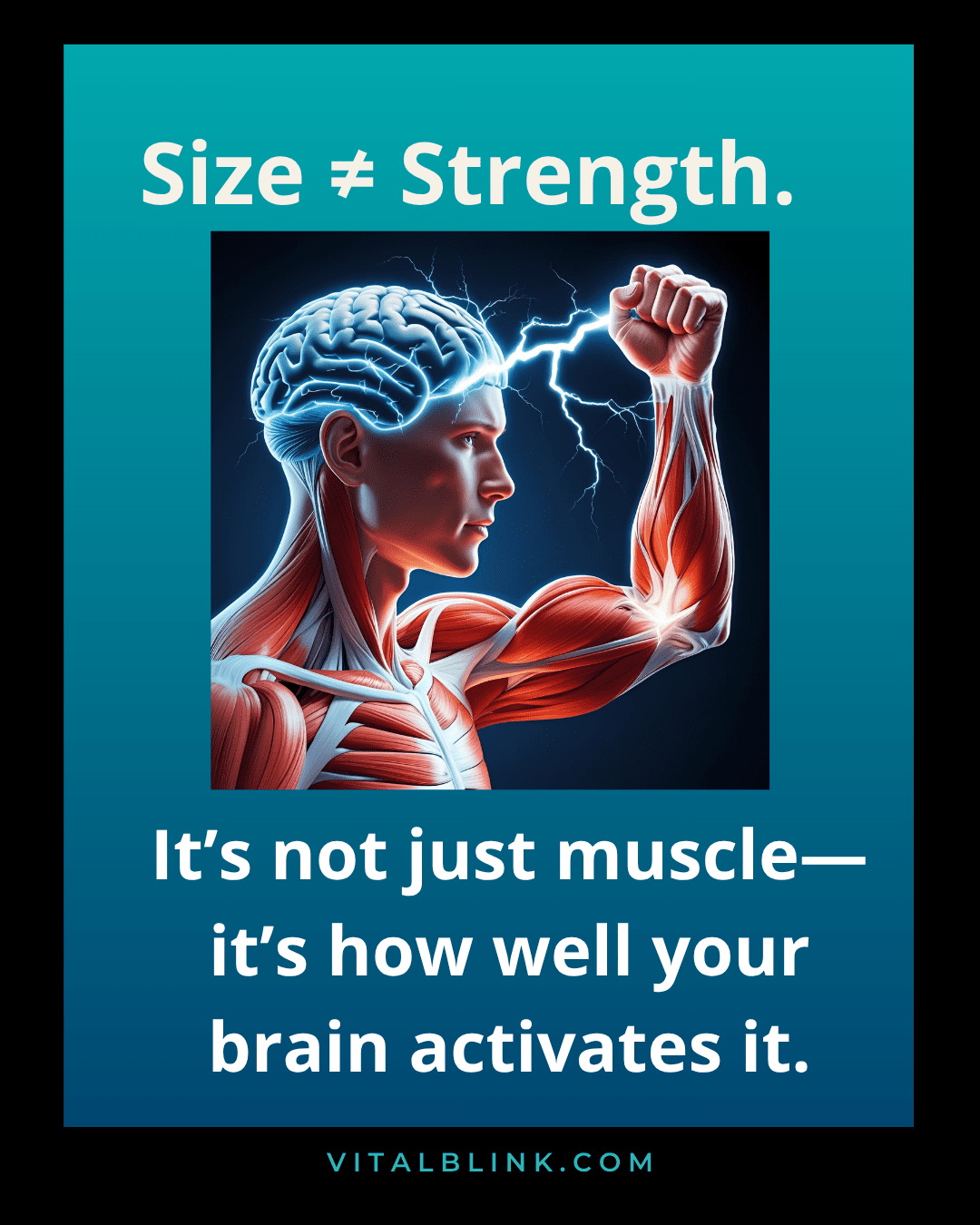
- Strength work, at least twice a week. Resistance work raises Brain-Derived Neurotrophic Factor (BDNF), a protein that supports the growth and maintenance of neurons. A meta-analysis in Neuroscience and Biobehavioral Reviews found significant cognitive benefits from resistance training in adults over 50, particularly in executive function and memory (Northey et al., 2018).
- Sleep as a non-negotiable. The glymphatic system, the brain’s waste clearance network, operates primarily during deep sleep and is responsible for clearing amyloid and tau proteins. Chronic sleep restriction is directly associated with increased amyloid accumulation (Xie et al., Science, 2013).
- Consistent cellular nutrition. Brain health after 50 depends on giving the brain the raw materials it needs to produce energy. Supporting ATP production, mitochondrial function, neurotransmitter balance, hydration, and B vitamin metabolism through diet and targeted supplementation gives the system what it needs to function at full capacity.
- Social engagement and cognitive challenge. Meaningful conversation, learning new skills, and intellectually demanding activities support neural plasticity. Cognitive reserve, built over a lifetime of engagement, is associated with delayed onset of dementia even in the presence of pathological brain changes (Stern, Lancet Neurology, 2012).
My Perspective
I’ve been watching my mother for years now, and what I’ve noticed is not just her condition. I’ve noticed my own response to it. There was a period where I watched her and felt grief and helplessness, which is natural. Then something shifted. I started watching with a different kind of attention, the kind where you’re not just present but also asking: what am I seeing? What is happening at the level I can’t see? What does this mean for the decisions I am making right now?
I changed several things. Not all at once. I started taking creatine daily, after reading the research on brain ATP and realizing it was not just an athletic supplement. I got serious about my sleep. I looked carefully at the forms of B vitamins I was taking and switched to the active versions. I added citicoline and made magnesium a consistent part of my protocol, not something I took occasionally.
None of this is a guarantee. I know that. My grandmother had dementia. My mother has it. I carry that awareness every day. What I also carry is the knowledge that nearly half of dementia risk is modifiable, and I am not willing to leave that half unattended. Brain health after 50 is not a passive process. I want to recognize my grandson. I want to be present for the conversations that matter. That is what I am building toward, one deliberate choice at a time.
For more on how strength work supports the brain as well as the body, read What Jane Fonda Didn’t Know About Resistance Training After 50.
Frequently Asked Questions
Does having a parent with Alzheimer’s mean I will develop it too?
Having a parent with Alzheimer’s increases your risk, but it does not determine your outcome. First-degree relatives of someone with late-onset Alzheimer’s have roughly two to three times the average population risk. However, research published in The Lancet identifies that approximately 40 percent of dementia cases are attributable to modifiable lifestyle factors. Genetics set part of the stage. The habits you build over decades shape the rest.
When should I start paying attention to brain health after 50?
The research is clear that the cellular changes associated with Alzheimer’s begin 15 to 20 years before any clinical signal appears. This means that for a woman in her 50s, the most important brain health after 50 decisions are happening now, not later. Starting a consistent protocol in your 40s and 50s, before any concern is present, is when it has the greatest potential impact on long-term cognitive capacity.
What lifestyle habits have the strongest evidence for brain health after 50 specifically?
The strongest evidence points to four areas: resistance and aerobic movement (which raises BDNF and improves cerebral blood flow), consistent quality sleep (which allows the brain’s glymphatic system to clear waste proteins), social and cognitive engagement (which builds cognitive reserve), and targeted cellular nutrition, including support for ATP production, mitochondrial function, and B vitamin metabolism in their active forms.
Is creatine only for athletes?
No. Creatine is a compound the brain uses to recycle ATP rapidly, making it one of the most studied nutrients for cognitive function as well as physical performance. Research in Proceedings of the Royal Society B found that creatine supplementation improved working memory and processing speed in healthy adults. Its relevance to brain health is independent of athletic activity.
What is the glymphatic system and why does it matter for dementia risk?
The glymphatic system is the brain’s waste clearance network, a system of channels that flushes metabolic waste, including amyloid and tau proteins, out of brain tissue. It operates primarily during deep sleep. When sleep is chronically shortened or disrupted, this clearance process is impaired, allowing waste proteins to accumulate. Research published in Science identified glymphatic clearance as a key mechanism linking sleep quality to Alzheimer’s risk.
What is the difference between active and synthetic forms of B vitamins?
Many B vitamin supplements use precursor forms, such as pyridoxine (B6) and cyanocobalamin (B12), that the body must convert into their active forms before use. This conversion becomes less efficient with age and is impaired in people with common genetic variants affecting B vitamin metabolism. The active forms, pyridoxal-5-phosphate (P-5-P) for B6 and methylcobalamin for B12, are usable by the body directly and are particularly relevant for women over 50.
Build the cellular foundation your brain needs for the decades ahead.
Ready for the next step? Get early access to Calm Energy, our first signature formula.
Sources: Jack CR Jr et al. Hypothetical model of dynamic biomarkers of the Alzheimer’s pathological cascade. Lancet Neurol. 2010;9(1):119-128. https://pubmed.ncbi.nlm.nih.gov/20083042/ | Livingston G et al. Dementia prevention, intervention, and care: 2020 report of the Lancet Commission. Lancet. 2020;396(10248):413-446. https://pubmed.ncbi.nlm.nih.gov/32738937/ | Rae C et al. Oral creatine monohydrate supplementation improves brain performance. Proc Biol Sci. 2003;270(1529):2147-2150. https://pubmed.ncbi.nlm.nih.gov/14561278/ | Bhagavan HN, Chopra RK. Coenzyme Q10: absorption, tissue uptake, metabolism and pharmacokinetics. Free Radic Res. 2006;40(5):445-453. https://pubmed.ncbi.nlm.nih.gov/16551570/ | Montgomery SA et al. Meta-analysis of double blind randomized controlled clinical trials of acetyl-L-carnitine versus placebo in the treatment of mild cognitive impairment and mild Alzheimer’s disease. Int Clin Psychopharmacol. 2003;18(2):61-71. https://pubmed.ncbi.nlm.nih.gov/12598961/ | Nobre AC et al. L-theanine, a natural constituent in tea, and its effect on mental state. Asia Pac J Clin Nutr. 2008;17 Suppl 1:167-168. https://pubmed.ncbi.nlm.nih.gov/18296328/ | Colzato LS et al. Working memory reloaded: tyrosine repletes updating in the N-back task. Front Behav Neurosci. 2013;7:200. https://pubmed.ncbi.nlm.nih.gov/24379768/ | Alvarez XA et al. Citicoline improves memory performance in elderly subjects. Methods Find Exp Clin Pharmacol. 1997;19(3):201-210. https://pubmed.ncbi.nlm.nih.gov/9203170/ | Rude RK, Shils ME. Magnesium. In: Shils ME et al, eds. Modern Nutrition in Health and Disease. 10th ed. 2006. | Obeid R et al. Cobalamin coenzyme forms are not likely to be superior to cyano- and hydroxyl-cobalamin in prevention or treatment of cobalamin deficiency. Mol Nutr Food Res. 2015;59(7):1364-1372. https://pubmed.ncbi.nlm.nih.gov/25975431/ | Smith AD et al. Homocysteine-lowering by B vitamins slows the rate of accelerated brain atrophy in mild cognitive impairment. PLOS ONE. 2010;5(9):e12244. https://pubmed.ncbi.nlm.nih.gov/20838622/ | Northey JM et al. Exercise interventions for cognitive function in adults older than 50: a systematic review with meta-analysis. Br J Sports Med. 2018;52(3):154-160. https://pubmed.ncbi.nlm.nih.gov/28438770/ | Xie L et al. Sleep drives metabolite clearance from the adult brain. Science. 2013;342(6156):373-377. https://pubmed.ncbi.nlm.nih.gov/24136970/ | Stern Y. Cognitive reserve in ageing and Alzheimer’s disease. Lancet Neurol. 2012;11(11):1006-1012. https://pubmed.ncbi.nlm.nih.gov/23079557/ | Note: Verify all PubMed links before publishing.