


Published: July 2026 | Vital Blink
Creatine for Women Over 50: What the Research Shows
The evidence is stronger than the bodybuilder reputation suggests, and clearer than I expected.
I was at the gym talking with a friend the other day. She said something I suspect a lot of women have thought.
“I’m doing the same workouts I did ten years ago. I just don’t get the same results anymore.”
I understood her completely, because I’d been making my own version of the same mistake.
For years, I fasted from dinner until lunch the next day, mostly because I just didn’t feel like eating in the morning. I did a lot of hard cardio and avoided weights entirely. I was afraid of bulking up, of looking like Hulk’s girlfriend. At this point it would probably be more like Hulk’s grandmother.
Surrounded by three generations of researchers, I always have questions. I assume nothing and challenge everything. This time I challenged the idea that this was simply part of getting older.
It took me until this past year to learn I had it exactly backward. The research on creatine for women over 50 was clearer than I expected, and none of it pointed where I assumed.
Why Women Store Less Creatine to Begin With
The rabbit hole started with a number I did not expect. Women carry 70 to 80 percent lower endogenous creatine stores than men, largely because creatine concentration tracks with muscle mass (Brosnan and Brosnan, Annual Review of Nutrition, 2007). That gap exists across a woman’s whole life. It is not something that appears at menopause. It is the starting line, which is one reason creatine for women over 50 gets discussed differently than creatine for a twenty-five-year-old athlete.
What changes at menopause is the hormonal environment around it. A 2021 review in the journal Nutrients on creatine and women’s health across the lifespan noted that estrogen and progesterone influence creatine kinase activity and the enzymes responsible for making creatine in the body (Smith-Ryan et al., Nutrients, 2021). When those hormones shift, the system that produces, stores, and cycles creatine shifts with them. The review does not claim to have measured that shift directly in post-menopausal women. It draws the connection from what estrogen and progesterone are already known to do to creatine metabolism at other points in a woman’s life, and reasons forward from there.
That distinction matters to me. I would rather tell you what the research on creatine for women over 50 says than round it up to sound more dramatic than it is.
What Is Creatine?
Creatine is a compound made naturally in the liver, kidneys, and pancreas,
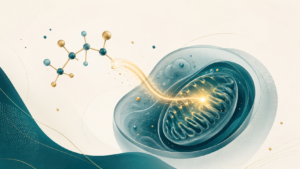
and stored mostly in skeletal muscle, with a smaller amount in the brain. It helps regenerate ATP, the molecule cells use for fast, high-demand energy, which is why it matters to both muscle contraction and neuron firing. Supplemental creatine monohydrate is the most studied form and the one used in the trials referenced in this article.
What the Research Shows
The strongest evidence comes from a 2017 study that combined the results of 22 separate trials and 721 older adults. People who took creatine while doing resistance training gained more muscle than people who just did the training alone, about three pounds more, and got stronger doing it (Chilibeck et al., Open Access Journal of Sports Medicine, 2017).
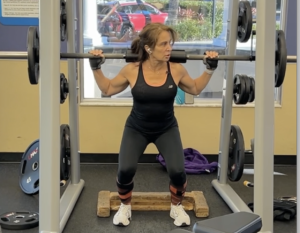
A separate year-long study of 70 older adults found the same pairing built more bone in the shin and denser muscle in the lower leg than resistance training by itself (Candow et al., Medicine and Science in Sports and Exercise, 2021).
Smaller studies that look only at post-menopausal women are less consistent. Some found muscle gains, some found bone gains, one found neither (Gualano et al., Experimental Gerontology, 2014; Chilibeck et al., Medicine and Science in Sports and Exercise, 2015 and 2023). That is normal for a smaller group of people. The bigger studies point clearly toward creatine helping build muscle, as long as you are also lifting.
Creatine never worked on its own in any of this research. It worked alongside resistance training, not instead of it.
Where the Brain Enters the Picture
The part of the research that held my attention longest was not about muscle at all.
The brain is a demanding organ. It uses a disproportionate share of the body’s energy relative to its size, and creatine plays a role in keeping that energy supply available on demand, the same mechanism it supports in muscle (Smith-Ryan et al., Nutrients, 2021). The review points to studies suggesting creatine may support mood and cognitive performance through this energy pathway, though the strongest of those studies were conducted in people managing depression, not specifically in post-menopausal women. Researchers are still working out how directly that finding transfers to a healthy post-menopausal population, which is a more honest place to leave it than a confident claim would be.
I am not going to tell you creatine is a proven mood treatment for women in menopause. The honest version is that the mechanism is plausible, the early signal is interesting, and post-menopausal-specific research on creatine and brain energy for mood and cognition is still catching up to the muscle research. If brain fog and afternoon energy crashes sound familiar, I wrote about the neurological side of that shift here, and creatine’s role in cellular energy is one piece of a larger picture that also includes resistance work, the subject of this piece on resistance training after 50.
My Perspective
I stopped fasting through the morning. I added weights back into my week, slowly, after avoiding them for most of my adult life over a fear that never had good evidence behind it. Those two changes came first, before any supplement.
When I built Calm Energy, I was not looking for an ingredient that would help me build muscle. I was looking at how a woman’s brain produces and uses energy after 50, and creatine’s role in that specific mechanism is what earned it a place in the formula, dosed at the 5 grams used in the research on brain energy. The muscle research turned out stronger than I expected. The brain energy mechanism is still the reason it is in Calm Energy at all.
My friend at the gym was not wrong that her results changed. She was working from an old assumption about why. I was too, for longer than I want to admit.
Frequently Asked Questions
What is creatine and why do women over 50 have less of it?
Creatine is a compound the body makes and stores mostly in muscle, used to regenerate fast cellular energy. Women naturally carry 70 to 80 percent lower creatine stores than men, largely because creatine levels track with muscle mass, a gap present across the lifespan rather than something new after 50 (Brosnan and Brosnan, Annual Review of Nutrition, 2007).
Does menopause change how the body handles creatine?
Estrogen and progesterone influence the enzymes involved in making and cycling creatine, so their decline at menopause likely affects creatine metabolism. Research has not yet measured this shift directly in post-menopausal women; the connection is drawn from what these hormones are known to do to creatine pathways more broadly.
Does creatine for women over 50 build muscle and bone after menopause?
Yes, when paired with resistance training. A meta-analysis of 22 trials and 721 older adults found significantly greater gains in lean muscle mass and strength with creatine plus resistance training than with resistance training alone. Smaller trials specifically in post-menopausal women show more variation, but the larger body of evidence points clearly toward a real benefit.
Isn’t creatine just for bodybuilders?
That reputation predates most of the research on women. Creatine’s mechanism, replenishing fast cellular energy, applies to any tissue with high energy demand, including the brain. Current research on creatine for women over 50 focuses on that broader role, not on building visible muscle size.
Can creatine support brain energy and mood after menopause?
Creatine may support brain energy by helping regenerate the same high-energy molecules it supports in muscle. Early research links this mechanism to mood and cognitive performance, though the strongest studies were conducted in clinical depression populations rather than post-menopausal women specifically. Researchers are still working out how directly that applies.
Calm Energy is built around this exact mechanism: 5 grams of creatine for post-menopausal brain energy.
Sources: Chilibeck PD, Kaviani M, Candow DG, Zello GA. Effect of creatine supplementation during resistance training on lean tissue mass and muscular strength in older adults: a meta-analysis. Open Access Journal of Sports Medicine. 2017;8:213-226. doi.org/10.2147/OAJSM.S123529 | Candow DG, Chilibeck PD, Gordon JJ, Kontulainen S. Efficacy of Creatine Supplementation and Resistance Training on Area and Density of Bone and Muscle in Older Adults. Medicine and Science in Sports and Exercise. 2021;53(11):2388-2395. doi.org/10.1249/MSS.0000000000002722 | Smith-Ryan AE, Cabre HE, Eckerson JM, Candow DG. Creatine Supplementation in Women’s Health: A Lifespan Perspective. Nutrients. 2021;13(3):877. doi.org/10.3390/nu13030877 | Brosnan JT, Brosnan ME. Creatine: endogenous metabolite, dietary, and therapeutic supplement. Annual Review of Nutrition. 2007;27:241-261. | Gualano B, Macedo AR, Alves CR, et al. Creatine supplementation and resistance training in vulnerable older women: a randomized double-blind placebo-controlled clinical trial. Experimental Gerontology. 2014;53:7-15. doi.org/10.1016/j.exger.2014.02.003 | Chilibeck PD, Candow DG, Landeryou T, Kaviani M, Paus-Jenssen L. Effects of Creatine and Resistance Training on Bone Health in Postmenopausal Women. Medicine and Science in Sports and Exercise. 2015;47(8):1587-1595. pubmed.ncbi.nlm.nih.gov/25386713 | Chilibeck PD, Candow DG, Gordon JJ, et al. A 2-yr Randomized Controlled Trial on Creatine Supplementation during Exercise for Postmenopausal Bone Health. Medicine and Science in Sports and Exercise. 2023;55(10):1750-1760. doi.org/10.1249/MSS.0000000000003202 | Note: Verify all PubMed links before publishing.