

Why I’m Finally Finishing the Micro-Habit App
A conversation with a friend from Masters swimming, and why micro habits stick when big plans don’t.
Published: October 2026 | Vital Blink
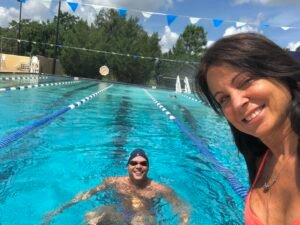
I was talking to the mother of a young lady who swims Masters with my husband and me. I admire this woman and her husband for the care, time and love they give their daughter, who is in her 20s and has Down syndrome. They are a very beautifully special family.
Talking with her mother, who is also over 50, we were sharing how we wish we had time to stretch and do other movements. We are both people who start working and just cannot stop for 15 or 30 minutes to go into a full-blown routine like our husbands do. I don’t have to care for anyone, so she has more pieces to her day than I do. But this gave me confirmation. This is a problem not just for me.
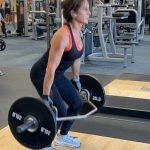
I get up before the sun and lift weights and do my VO2 work. But then life gets in the way, and stretching and balance are a different story. I start working, the day takes over, and the 15 minutes I meant to spend on them never come.
My husband does his full stretching routine. I watch him while I am already in the morning rush and wonder where he finds the time, because somehow he does.
The App I Started a Year Ago
About a year ago, I wrote out the plan for an app to help me build micro habits. Then the plan grew. Movement, then water, then nutrition with barcode scanning, then fueling for muscle, brain and gut, then a community. I wanted one app that could replace several.
I got too ambitious on the first rollout, and life got busy. So it has been sitting there unfinished.
It’s the same mistake we make with habits. We usually dive in and try to do a lot all at once, and it doesn’t stick because we have busy lives. That conversation with her mother told me I really do need to finish it. Not another app that puts me into long routines I never finish, and much less stick to.
What I Cut, and What’s Left
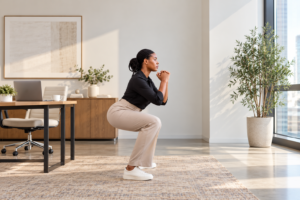
So I cut it back to one thing: movement. Short moves for strength, balance and flexibility, one to two minutes each, that fit at a desk, at home between chores, or on a work trip.
Every move has levels, from a gentle starting point all the way up to hard, because plenty of us already train and don’t want to be bored. Each move also comes with a pace cue, slow and controlled, so you get the muscle benefit instead of rushing through it. Water, nutrition and the rest can wait their turn.
Do Micro Habits of Movement Really Count?
I know this one firsthand. I got too ambitious on the first rollout of the app, and life got busy. So it has been sitting there unfinished.
Habits work the same way. We usually dive in and try to do a lot all at once, and it doesn’t stick because we have busy lives. A 30-minute stretching session asks you to stop everything. A two-minute move fits between what you’re already doing.
How Long Does It Take to Build a Habit?
In a study from University College London, 96 adults each chose one new daily behavior and tracked it for 12 weeks. It took a median of 66 days for the behavior to become automatic, with a range from 18 to 254 days. Missing the occasional day did not seriously set the process back (Lally et al., European Journal of Social Psychology, 2010).
The part people miss is how the study was set up. Each person tied their new behavior to something they already did once a day, like finishing breakfast. The daily cue did the remembering for them. So pick a moment that already happens every day, your coffee, brushing your teeth, the walk to the car, and attach one small move to it. And if you miss a day, you pick it back up the next one. The research says that doesn’t undo your progress.
Do Short Bursts of Movement Really Count?
Yes, and the research on women is encouraging. A 2024 study in the British Journal of Sports Medicine followed 13,018 women who did not exercise in their leisure time, using wrist devices to measure short bursts of vigorous everyday activity, like climbing stairs briskly or carrying heavy shopping. Women who got a median of 3.4 minutes of these bursts a day had a 45 percent lower
risk of major cardiovascular events over about eight years, compared with women who got none (Stamatakis
et al., 2024).
It is an observational study, so it shows a link and can’t prove cause. Still, 3.4 minutes is a number anyone can fit into a full day.
Why This Matters to Me
Movement is such an important part of keeping our muscles, keeping our flexibility, and keeping the fascia around our muscles from tightening, so we can keep moving and stay independent and capable.
I want to help women because I don’t want to see anybody slouching or walking with a walker. Strength, balance and flexibility are what keep you going up the stairs, getting up off the floor, and traveling on your own terms.
If strength is where you want to start, read how I’m building bone density after 50.
What the First Version Does
The first part is simple on purpose. It suggests one- to two-minute moves for strength, balance and flexibility, spaced through your day, wherever you are: at your desk, at home between chores, or on a work trip. If a move doesn’t fit the moment, you swap it for another. And you get to see your progress build, because micro moments are easy to forget.
I’m gifting it to the people who already use Calm Energy. For those who don’t and still want to build these micro habits, I’m keeping it very economical.
My Perspective
I’m building the system I need myself. One that makes it easy to keep the habit, so the stretching and balance work stop being the thing I skip. One small habit at a time.
Frequently Asked Questions
What is a movement micro habit?
A movement micro habit is a one- to two-minute move, like slow squats, standing on one foot, or a doorway stretch, done at a natural break in your day. It is small enough to repeat daily without stopping what you’re doing.
How long does it take to form a habit?
In a University College London study, it took a median of 66 days for a daily behavior to become automatic, with a range of 18 to 254 days. Missing an occasional day did not seriously affect the process (Lally et al., European Journal of Social Psychology, 2010).
Do a few minutes of movement a day make a difference?
Research suggests they can. In women who did not exercise, a median of 3.4 minutes a day of short vigorous bursts during daily life was linked to a 45 percent lower risk of major cardiovascular events (Stamatakis et al., British Journal of Sports Medicine, 2024).
Why do long workout routines fail for busy women?
Long routines ask you to stop everything for 15 to 30 minutes, which a full workday rarely allows. Habits stick better when the action is small and tied to something you already do.
Is the Vital Blink micro-habit app free?
It will be free for Calm Energy customers. For everyone else, it will be offered at a very economical price.
Calm Energy customers get the micro-habit app free when it launches.
Sources: Lally P, van Jaarsveld CHM, Potts HWW, Wardle J. How are habits formed: Modelling habit formation in the real world. European Journal of Social Psychology. 2010;40(6):998-1009. DOI: 10.1002/ejsp.674 | Stamatakis E, et al. Device-measured vigorous intermittent lifestyle physical activity (VILPA) and major adverse cardiovascular events: evidence of sex differences. British Journal of Sports Medicine. 2024. PMC11874358 | Note: Verify all links before publishing.